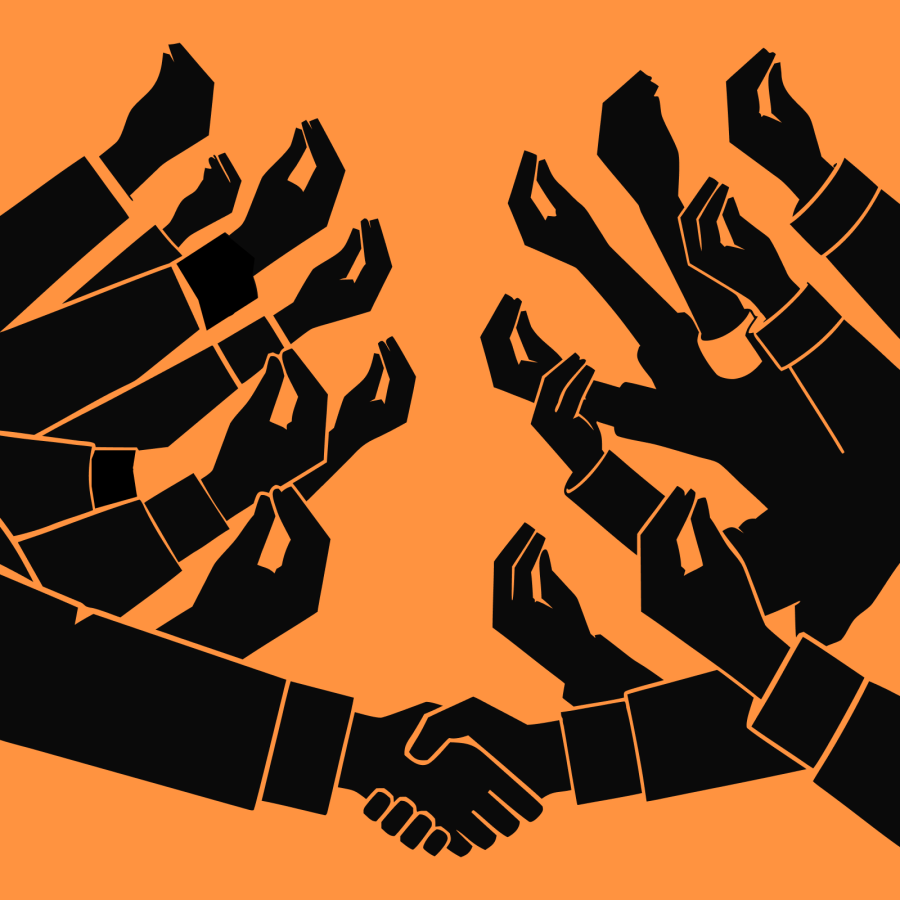
AI is automating the administrative era of people operations, and that's fine. But the work that helps a company hire well, build strong managers, retain top talent, and scale without breaking its culture is something else entirely. Here's why the best companies are investing in it more deliberately.
Yes, AI can automate and augment certain elements of HR, but it can’t create the people systems that help companies hire well, develop strong managers, retain top talent, and scale without breaking their culture — despite the popular narrative on LinkedIn suggesting otherwise.
Without someone actively building the organization underneath the product, companies keep hiring (and firing) exceptional people only to place them inside a system that was never designed to support their high performance. And because you don’t want to make those kinds of mistakes, you should invest in your People and Culture team. At Solflare, we understand the importance of culture in scaling a company, which is why we have a dedicated People and Culture team making sure our employees enjoy working here.
An obvious and very real scenario
Imagine a CEO deciding his or her Human Resources department created problems that didn’t previously exist and fires the whole department, thinking “the problems” will disappear. This has happened. And often: at Bolt.com; Uber cut a quarter of its People function; IBM automated 94 percent of its HR tasks with a single AI system, selling it as an upgrade. Kudos to AI, right?
Here’s another scenario: a company overhires during a good quarter, skips the people-infrastructure work, and discovers that the organizational culture at 400 people looks nothing like the good ol’ days of 80. The correction then arrives on a Friday via email, and the new hires find out when they can no longer log in. Downsizing core business inevitably implies the downsizing of support functions, so what is HR going to support?
Both scenarios treated people operations as overhead. Both paid for it, just at different speeds, and with very different results.
The mistake is grouping all people, organization and culture work together. There’s the “personnel” admin work. There’s everyday people operations support. And then there is the strategic work that helps a company hire well, keep strong people, create strong leaders and efficient managers, and avoid breaking as it grows at pace.
What is AI actually replacing?
AI is cleaning up the old admin layer. That is not a crisis. In many companies, it’s overdue. But the People and Culture function that helps a company grow, make better decisions, and keep the people it worked hard to hire looks very different from the paperwork-heavy HR everyone loves to complain about.
So what did Bolt, Uber, and IBM actually do when they made their cuts? They stripped the old personnel transactional layer of their People function. And in each case, they kept or elevated everything strategic towards People and Culture. Uber cut headcount in People and Places and simultaneously put its people strategy leader at the executive table. IBM redirected automation savings into higher-complexity roles. Bolt kept a people operations team for the work that still requires human judgment. All of these decisions make sense.
But good judgment doesn’t bring clicks in the attention economy. So the lesson isn’t “fire HR.” It’s simpler than that: the personnel transactional version of HR getting automated is not the strategic version worth protecting.
And then there’s Anthropic
Anthropic recently posted an ad for a People Research Scientist role, similar to what OpenAI has been working on over the last couple of months. This position within the People and Culture team requires expertise in experimental design, longitudinal research methods, causal inference, and statistical modeling, with a focus on studying collaboration patterns and their relationship to performance outcomes. Lots of fancy words to describe people who study how humans work together inside an organization. In plain English: they are hiring someone to study how teams actually perform, not how they say they perform in a survey. The reported salary range is $245,000 to $310,000, signaling the impact and accountability of what this role brings to the table.
Well, you might think, surely this job could be automated as well, especially given Anthropic’s core product? There is a reason this work is hard to automate:
- AI can answer a policy question in seconds. It can summarize survey results, spot patterns, and show where something may be going wrong. And it’s great at doing that.
- AI can’t walk into a team and understand what people are not saying. It cannot earn trust after a difficult performance conversation. It can’t coach a manager through the part of leadership that doesn’t fit on a dashboard. It can’t create the conditions in which people with options choose to stay.
This is what organizational development is really about.
It’s not a title, a department, or a debate about whether HR’s mascot is Toby Flenderson from The Office or Harmony from Severance. It is the ongoing work of understanding how a company actually works: how decisions get made, how leadership behavior turns into
company norms, how culture survives growth, and how strong people either grow, stay, and perform, or slowly start looking elsewhere.
The symptoms of its absence are slow: meetings that produce nothing, talent that leaves for reasons nobody names, strategies that work in a slide deck and fail in execution. By the time the pattern is visible in a machine report, the piper’s already been paid.
AI is not the enemy. It may be an ally.
Eighty-one percent of CHROs at major companies are currently reskilling for AI, taking over company-wide AI adoption. Some are even rebranding as Chief AI Officers to avoid the implied pressure to replace people with AI. Not because they have nowhere else to go. Because this is where the work is going.
The real question AI introduces isn’t only technical. It’s human. How do you help people adopt new tools without creating chaos? How do you redesign work without losing trust? How do you develop managers who can lead teams through change rather than simply forwarding another AI policy? That is a people strategy question. And at some point, it becomes a human capital question.
Human capital follows the same logic as financial capital, with one critical difference: the CFO has a model. Human capital depreciates when people leave. Replacing one person costs between 60 and 200 percent of their annual salary, before accounting for the institutional knowledge that walks out with them and the productivity loss during the gap.
Human capital appreciates when people develop. It compounds when strong people attract other strong people. The imperative at a company competing for the same talent as everyone else is not to pay well. Everyone competing for that talent pays well. The imperative is to build an organization where that talent can actually perform at the level for which they were hired, and where the best among them choose to stay.
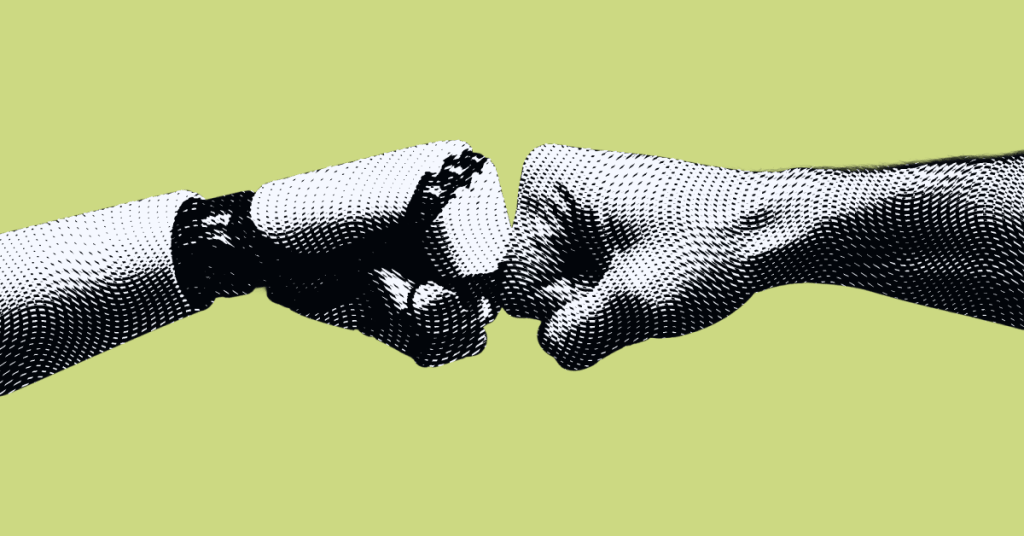
When the People and Culture function is weak or missing
The cost rarely shows up all at once. It shows up in small leaks across the business.
- Weak or absent employer brand: the company attracts people looking for any job, not people seeking a specific one. The first interviews educate rather than filter. The pipeline fills with candidates who will say yes to three other offers.
- Underperforming talent acquisition: the company hires for skills but misses the mark on judgment and cultural fit, leading to problems after probation has lapsed.
- Unclear performance management: high performers leave because they cannot see their own impact. Low performers stay because the expectations were never made explicit.
- Neglected talent development: people reach the ceiling of their current skills. Those with options find a higher ceiling elsewhere.
- Total rewards without data: compensation decisions made on intuition. Someone leaves for 15 percent more. The team finds out months later.
- People strategy is absent from business decisions: org structure changes, culture does not. New leaders arrive without understanding what the company actually is.
A company can have every system working and still produce managers who cannot lead effectively and who only handle tasks rather than develop people. This kind of managerial ceiling becomes the team’s ceiling. The talent hired precisely because it could grow stays eighteen months, learns what that kind of manager can teach, and leaves.
One thing is certain: we are automating the administrative era of people operations. The pace of this depends on how much competitive pressure a company can afford to feel. Tech companies are moving the fastest because the cost of not moving is immediately visible in hiring, retention, and performance. Government agencies will probably move last. The destination is the same. The timeline is not.
What success will look like
The companies that view the People and Culture function as admin overhead will automate it away and call that progress. The companies that view it as operating infrastructure will use AI to remove the busywork and invest more deliberately in the work that actually compounds: better managers, stronger teams, clearer performance, faster learning, and higher retention of people who could work almost anywhere.
Most companies at Anthropic’s scale do not build this kind of People and Culture depth. That kind of rigor usually appears much later, at companies like Google, Meta, or Microsoft.
Anthropic is moving earlier. And the signal isn’t just about the role. It’s the standard behind it: studying human collaboration with the same seriousness they bring to their models. Not a surface-level survey with three emoji options, but real work to understand how people make decisions, where collaboration flows, where it stalls, and which informal systems the company quietly depends on.
The best companies know this is not soft work. It is how you build a lasting competitive edge. This is exactly why Solflare has a dedicated People and Culture team. Not because the administrative era of HR needs protecting, but because ambitious scale requires an ambitious people infrastructure.